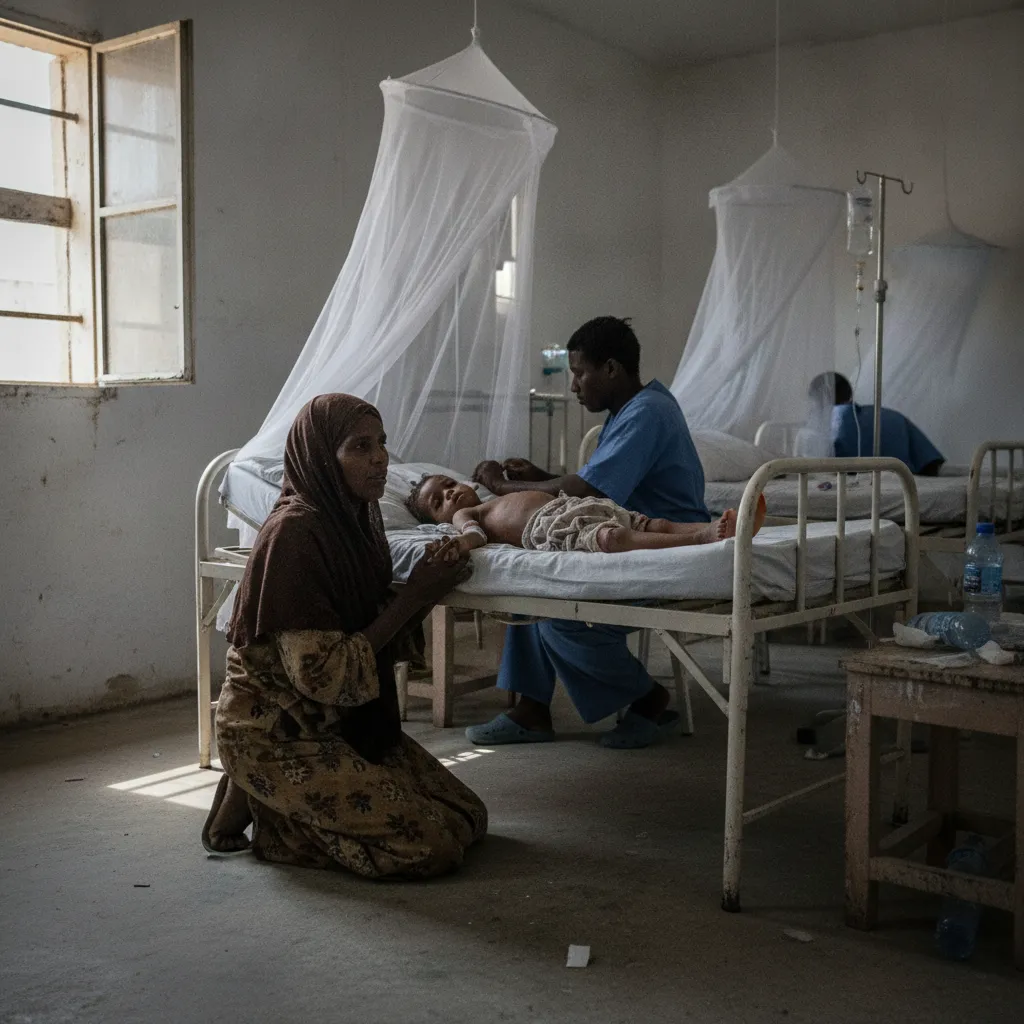
Halima Abdullahi Ibrahim spent three grueling days walking nearly ninety kilometers through the harsh landscape of southern Somalia, clutching her three year old daughter, Asho Hassan Abdi. By the time they reached Kismayo Referral Hospital, the little girl was suffering from edema, a telltale sign of severe acute malnutrition that caused her body to swell. In a stark white ward filled with metal beds and mosquito nets, Halima watched as medics worked to save her daughter, embodying a struggle currently shared by millions of parents across the region.
Asho is just one face of a staggering national catastrophe. Recent data indicates that roughly 1.92 million Somali children under five are facing acute malnutrition, with hundreds of thousands suffering from the most severe forms that carry a high risk of death. The crisis is particularly concentrated in the south, where families are trapped between recurring disease outbreaks and a chronic lack of clean water. With El Nino threatening further floods, experts fear more families will be displaced, pushing already overwhelmed health services to a breaking point.
The tragedy is compounded by a dwindling supply of international aid. At the Luglow settlement on the outskirts of Kismayo, dome shaped shelters made of plastic and branches huddle together on red earth while dirty water pools in the streets. Local officials warn that many displaced families have seen no humanitarian assistance since last year due to global funding cuts. This retreat in financial support has left organizations like the World Food Program struggling to meet basic needs even as deaths mount in stabilization centers.
UNICEF representatives and diplomats visiting the region emphasize that the window for intervention is closing. Sandra Lattouf of UNICEF noted that malnutrition combined with diseases like measles creates a lethal cocktail for toddlers who cannot afford travel to distant clinics. As ambassadors call for smarter ways to build community resilience amidst shrinking budgets, stories like Halima’s serve as a grim reminder that for many Somali children, survival depends entirely on whether their parents can endure an impossible journey to find help.