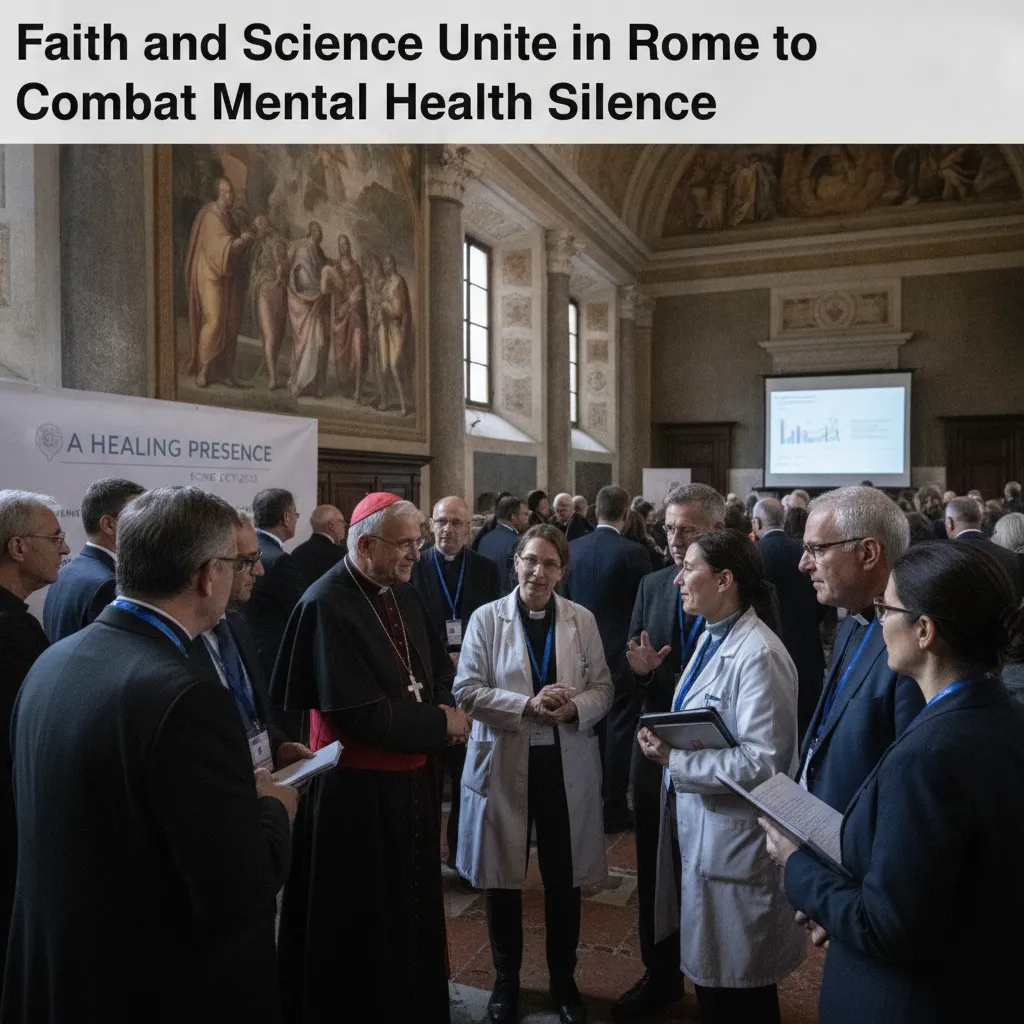
Clergy, psychiatric experts, and pastoral workers gathered in Rome last week for a landmark conference titled A Healing Presence: The Church’s Call to Mental Health Ministry. Held from October 9 to 10, the event aligned with World Mental Health Day and echoed Pope Leo XIV’s recent prayer intentions regarding psychological well-being. Under the patronage of the Pontifical Academy for Life, attendees worked toward a common goal of dismantling the long standing stigma that often prevents believers from seeking help within their own spiritual communities.
A central theme of the gathering was the essential partnership between faith and clinical science. Deacon Ed Shoener, a founder of the International Association of Catholic Mental Health Ministers, emphasized that while the Church aims to be a primary safe haven for those in distress, it is not intended to replace professional medical care. He argued that spiritual support provides a necessary layer of healing that fills gaps left by discrimination and fear, stressing that faith and science must operate hand in hand to truly serve an individual’s needs.
For Shoener, this mission is deeply personal. He shared the heartbreaking story of his daughter Katie, who struggled with bipolar disorder before dying by suicide in 2016. By speaking openly about her diagnosis in her obituary, Shoener sought to prove that mental illness does not define a person nor diminish their status as a beloved child of God. He noted that many people avoid discussing these struggles out of fear of appearing weak or risking their professional reputations, creating a void that he believes the Church is uniquely positioned to fill with compassion rather than judgment.
The conversation also touched upon global perspectives, including insights from Samuelle Falk, a psychiatry student from Sweden. Despite her country ranking highly on world happiness indices, Falk described a hidden epidemic of loneliness among Swedish youth. She observed that this internal suffering is actually driving some young people back toward the Church in search of genuine belonging and purpose beyond material prosperity. According to Falk, while medicine treats the mind, the Church offers a home for the soul and reminds marginalized youth that their value lies in being loved by God rather than in their worldly achievements.